

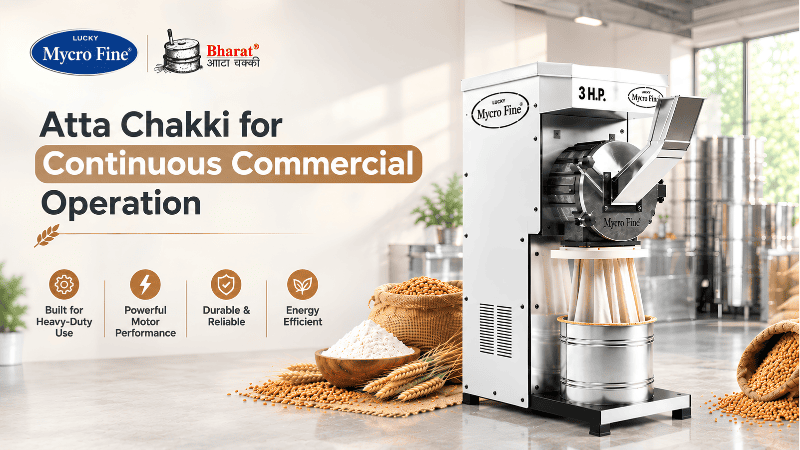
A machine used throughout the day has to handle regular loads without slowing down the workflow. That makes factors such as motor performance, grinding capacity, durability, cooling, a reliable commercial flour mill machine manufacturer, and ease of maintenance important. Choosing an atta chakki for continuous commercial operation means looking beyond basic capacity and considering how it performs under everyday pressure.
Factors making them durable
Heavy-Duty Build Quality
Commercial mills are built with industrial-grade, corrosion-resistant metals and hardy structures to minimize structural vibration and resist wear during continuous daily workloads.
High-Capacity Motor Power
Commercial chakkis are usually equipped with powerful commercial motors, typically ranging from 3 HP to 10 HP or higher, that deliver high output such as 100 kg per hour or more without stalling or overheating.
Energy Efficiency and Low Maintenance
Power usage matters because a commercial mill runs for hours. Look for a machine that does not consume more electricity than necessary during regular operation.
Tips for Buying Commercial Flour Mills
1. Check the build quality: Look at the material and overall construction. It should feel sturdy enough for regular commercial use.
2. Check reviews for the exact model: Do not stop at the brand name. Look for reviews of the model you are actually planning to buy.
3. Keep your budget realistic: Set your budget based on how much grinding your business needs. Don’t pay for capacity or features you are not going to use.
4. Check the warranty and service: Find out what the warranty covers and whether spare parts and service are easily available.
5. Consider the features you will actually use: Make sure the machine has features like Digital controls, different grinding settings, safety features, or built-in sifting, which can be useful. For more guidance, explore commercial atta chakki machine options for a flour mill setup.
Conclusion
A commercial flour mill is not just affected by power and grinding capacity; it is also affected by the motor. Build quality, cooling, energy use, maintenance, safety features, warranty, and after-sales support. A reliable mill can handle regular workloads while keeping daily operations smoother, more manageable, and cost-effective.
frequently Asked Questions
1. What makes a flour mill suitable for continuous commercial use?
Hardy construction, a powerful motor, a cooling system, durable parts, and easy maintenance make a flour mill suitable for continuous commercial use.
2. How much motor power is suitable for a commercial flour mill?
The required motor power depends on the expected production volume, operating hours, grain types, and desired output.
3. Why is cooling important in a commercial flour mill?
Effective cooling helps manage the heat produced during extended grinding. This is particularly important for businesses that operate their flour mill for several hours throughout the working day.
4. What should I check before buying a commercial flour mill?
Look at its construction, grinding output, motor, electricity use, maintenance needs, safety features, warranty, and the support available if something goes wrong.
5. How important is after-sales service for a commercial flour mill?
Good after-sales support can make machine ownership easier by providing access to maintenance assistance, replacement parts, troubleshooting, and technical support when the equipment needs attention.