





Flour is used extensively in Indian kitchens, in everything from rotis and chapatis to cakes and cookies. It is a staple in different Indian cultures. Many people rely on packaged flour because they believe it is convenient and cheap. In fact, store-bought flour does more harm to your health than good. They lack both quality and nutritional value.
This is why more and more people are switching to a domestic chakki made by a commercial flour mill machine manufacturer. Even though it may be expensive up front, the long-term benefits outweigh the expense. If you are one of those people who prefer store-bought flour, then this blog is definitely for you. In the following blog, we are going to explain the major health risks associated with using store-bought flour.
Loss of Nutritional Value Due to Processing
One of the major cons of buying packaged flour is that it lacks the necessary nutrients. Flour that is milled in large factories is often refined to increase the shelf life of the flour. The extensive refining removes nutrients from the flour. Bran, which is rich in fiber, helps in digestion and supports heart health, and germ, which contains vitamins, minerals, and healthy fats, are both removed during refining.
Some manufacturers try to improve the nutritional value by adding synthetic vitamins, but they are still not as beneficial as fresh, homemade flour.
Unnecessary Chemical Additives
Commercial flour manufacturers use various bleaching agents and chemicals to improve the appearance and texture of the flour. The common substances found in packaged flour include:
- Benzoyl peroxide is used to whiten the flour, which may cause an allergic reaction.
- Potassium bromate is used as a “flour improver”, which poses potential cancer risks.
- Other preservatives are added to extend the shelf life of the flour. They may lead to digestive and long-term health issues.
Contamination Risk
Grains are usually treated with pesticides before they are sent for milling. Some of these pesticides often remain in the grain. Additionally, packaged flour remains on the shelves or in the warehouses for a long time, which can lead to fungal growth, producing harmful mycotoxins. Packaged flour may also have some traces of insects or their eggs if they are not stored properly.
Low in Fiber
Whole wheat flour is supposed to contain dietary fiber that helps in digestion and in maintaining healthy blood sugar levels. Commercial flour is highly refined, which leads to a significant loss of fiber and contributes to poor digestion, leading to constipation, increased risk of diabetes because of a rapid spike in blood sugar, and high cholesterol levels, leading to heart disease.
Conclusion
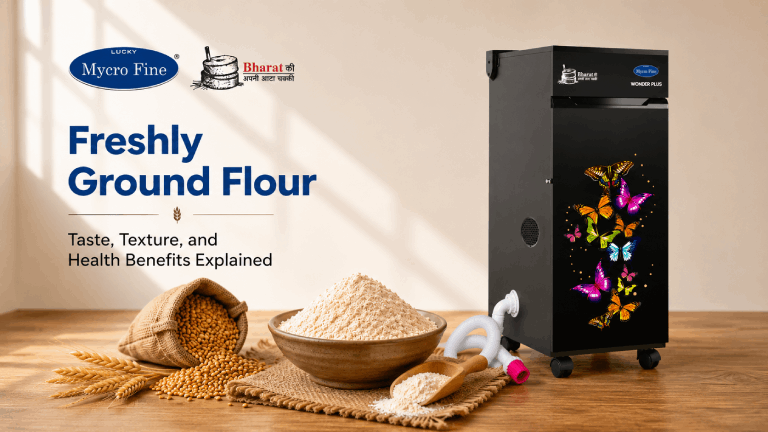
Apart from being healthy, flour milled in a domestic atta chakki has a distinct aroma and flavour. It also has a better texture than store-bought flour. Grinding your own flour at home will allow you to retain essential nutrients, avoid chemical additives, and enjoy tastier rotis, chapatis, parathas, breads, cakes, muffins, and many more baked items. A domestic flour mill is a wise investment that pays off in the long run, from the health benefits of freshly milled flour to real savings on your monthly grocery bill.
Frequently Asked Questions
Is store-bought flour unhealthy?
Store-bought flour can be less nutritious than freshly ground flour because it is highly refined and processed. Refining removes the bran and germ, which contain fiber, vitamins, minerals, and healthy fats. Some packaged flour may also contain bleaching agents and preservatives to extend its shelf life.
What nutrients are lost during flour refining?
Flour refining removes the bran and germ, resulting in the loss of dietary fiber and healthy fats. These nutrients support digestion, heart health, and overall wellness.
Why does packaged flour contain chemical additives?
Manufacturers may add bleaching agents, flour improvers, and preservatives to packaged flour to improve its appearance, performance, and shelf life. These additives are banned for use in many regions, which is why many people prefer freshly ground flour.
Can store-bought flour affect digestion?
Yes, highly refined flour may affect digestion because it contains less dietary fiber than whole-grain flour. A low-fiber diet can contribute to constipation, poor digestive health, and rapid spikes in blood sugar levels.
Is freshly ground flour healthier than packaged flour?
Freshly ground flour is generally considered healthier because it retains the grain’s natural fiber, vitamins, minerals, and healthy oils. It is also free from unnecessary refining and can be used immediately after grinding for maximum freshness.
Can packaged flour become contaminated during storage?
Yes, packaged flour can be exposed to moisture, insects, or fungal growth if it is stored improperly or kept for long periods. Proper storage helps reduce these risks, but freshly ground flour is typically consumed sooner, reducing the risks associated with extended storage.
Does grinding flour at home improve its nutritional value?
Grinding flour at home does not increase the grain’s nutrients, but it helps preserve the nutrients naturally present in whole grains by reducing nutrient loss associated with extensive processing and long-term storage.
Why are more families choosing a domestic atta chakki?
Many families choose a domestic atta chakki because it allows them to prepare fresh flour with better flavor, aroma, and nutritional value. Home grinding also helps avoid unnecessary additives that come with heavily processed packaged flour.